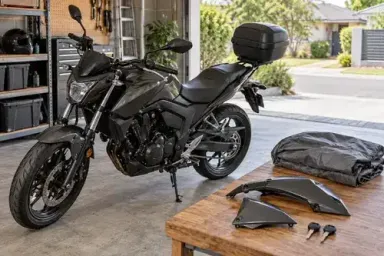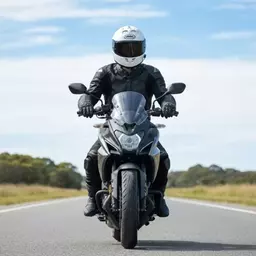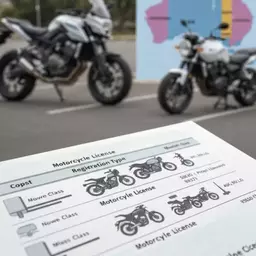
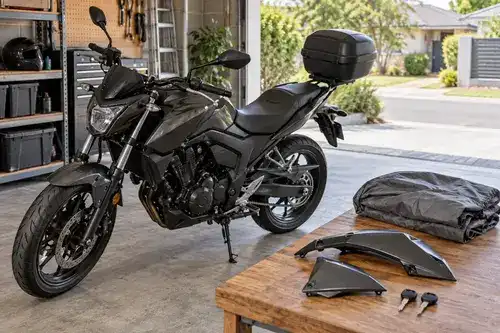
A motorcycle sale description should explain what goes with the bike as well as the bike itself. Fitted luggage, loose spares, a cover and your personal riding gear can all appear in the same garage photograph, yet they may have very different roles in the proposed sale. A clear inclusion list helps another person understand the offer without guessing from the background.
Make that list before taking final photographs or discussing collection. Separate the motorcycle's fitted equipment from loose items you intend to include and belongings you plan to keep. If an item is uncertain, leave it marked as uncertain until you have made a decision or checked what it actually is.
Set the boundaries before choosing a selling route
The same inclusion list is useful whether you prepare a private advertisement or enquire with a we buy motorbikes service. Describe the motorcycle and the items offered with it, then ask the buyer what information is needed for its assessment. Confirm the actual buying conditions directly rather than assuming that every accessory changes an offer.
Treat the list as a working record. If you decide to retain something after an initial conversation, update the description and tell the other person before they rely on the earlier version. A change to a loose spare is still a change to what you are offering.
Do not try to settle every item's value first. The immediate task is to establish what is present, what belongs to you and what is included. Pricing and buyer assessment can then take place against a consistent description.
Sort the items into four practical groups
Start with fitted equipment. These are items currently attached to the motorcycle, such as luggage or a documented accessory. Record what you know about them and whether they will remain on the bike for the sale.
Next, list loose items that you intend to include. These might be original parts retained after a change, a spare key, the owner's manual or a bike cover. Describe them individually where that makes the list clearer.
The third group is retained belongings. Your jacket, gloves, tools and personal luggage do not automatically belong in a motorcycle sale simply because they are pictured nearby. Keep them outside the inclusion list unless a separate, deliberate arrangement has been made.
The fourth group is unresolved items. Perhaps a box contains parts from several motorcycles, or an accessory came with the bike but its identity is unclear. Keep that uncertainty visible. Do not turn a box of unidentified pieces into a complete original-parts package through optimistic wording.
A simple working layout can use these fields:
- Item description.
- Fitted or loose.
- Included, retained or undecided.
- Known make or product reference.
- Supporting document, where available.
- Known condition or limitation.
- Photograph reference.
You can keep this in a notebook or a spreadsheet. Choose a format you will update when a decision changes.
Make the photographs match the actual offer
Photograph the motorcycle in the state you intend to offer it. Add separate photographs of loose included items so a viewer can distinguish them from the bike's fitted condition. An overall garage shot is rarely enough to establish the boundaries.
The motorcycle selling guide from bikesales provides useful context for keeping an advertisement accurate and being ready to explain its details. Your inclusion list can become the reference for those conversations.
If a photograph contains something you are keeping, either take a clearer photograph or state the exclusion plainly. Avoid relying on a small note far from the main description when a large pictured item could reasonably be mistaken for part of the offer.
Keep photographs current. If luggage is removed or a loose accessory is sold separately, replace the affected images and revise the list. Retain a copy of the version you discussed with a buyer so you can explain any later changes.
Do not use a supplier's photograph to represent the condition of a used accessory. A product image may help identify a model, but the buyer also needs to understand the actual item you are including.
Describe fitted accessories without overpromising
Record the accessory as specifically as your evidence allows. A receipt, product label or installation invoice may establish its identity or history. If you do not know who fitted it or which version it is, say so.
Distinguish identity, installation and current condition. A receipt shows a purchase. An installation record may describe work completed. Neither replaces an assessment of present condition or establishes suitability for another motorcycle.
Avoid claiming that a fitted accessory makes the bike worth more by a particular amount. Buyers may assess the overall motorcycle and the equipment differently. The useful contribution you can make is a clear description of what is fitted and what supporting information is available.
If you plan to retain a fitted item, resolve the removal and resulting bike condition before finalising the description. Some changes may require suitable professional work. This is a planning question, not an invitation to disconnect wiring or remove components without the relevant knowledge and instructions.
After any change, update the photographs and condition description. Another person should not arrive expecting the motorcycle shown in an older image and find a different arrangement.
Give loose extras their own inventory
Loose extras can be useful to a buyer, but only if their identity and status are clear. List the items you have actually located rather than relying on a memory that the original pieces are somewhere in storage.
This private motorcycle sale guide includes original parts, manuals and keys among the items to organise. For your own sale, record exactly which of those items are present instead of using a general phrase such as all the extras.
A loose original component should be described as original only when you have a reasonable basis for that description. If it was supplied by a previous owner and has not been identified, record that history and uncertainty. Do not promise compatibility with the motorcycle from appearance alone.
Keys deserve a separate count and description. State what is supplied and what has actually been checked. Do not call a key fully functioning if it has not been tested in the relevant use. The site's guide to lost motorbike key steps can help frame questions about missing or uncertain keys without making assumptions about a particular system.
Keep small related items grouped and labelled for handover. If a loose accessory needs a separate mount or key, note whether it is present. An item list should expose missing pieces rather than conceal them inside a package description.
Keep personal riding gear separate from bike equipment
Riding gear is personal equipment, and its next use deserves its own decision. A motorcycle sale does not establish that a jacket, helmet or pair of boots is suitable for another rider or for your next riding plan.
If you intend to keep riding, make a separate gear review list. Consider the condition, history and fit of your equipment using the relevant manufacturer's guidance and suitable professional advice where needed. Avoid treating a sale inclusion exercise as a safety assessment.
The site's overview of essential gear for new motorbike riders can help you organise the categories to review. Keep any actual suitability decision specific to the equipment and rider.
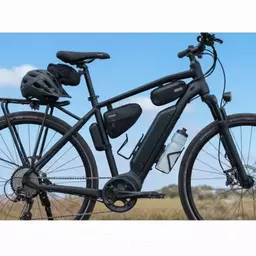
If your next purchase may be electric, review its requirements separately. The article on electric-bike accessories for riders provides context for asking about future equipment needs. Do not assume that an item retained from one vehicle will fit, connect to or suit a different one.
This separation also keeps the sale description simpler. The buyer can assess the motorcycle and agreed extras, while you make a deliberate decision about your own riding kit.
Check storage spaces and connected accessories
Before final handover, review the motorcycle's storage spaces and any included bags. Look for personal belongings, private papers and items borrowed from someone else. Do not assume a compartment is empty because it has not been used recently.
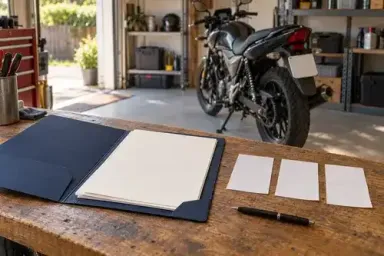
Keep the motorcycle's relevant documents together and remove unrelated personal material from buyer copies. Retain your own records securely. A clear handover pack should explain the bike without exposing information that has nothing to do with it.
Connected accessories may need their own preparation. Identify any device associated with a personal account and follow the manufacturer's documented ownership-transfer or reset process where appropriate. Avoid handing over your account credentials as a shortcut.
If you do not know how a device is managed, resolve that question before promising it as a working included feature. The inclusion list can state that transfer arrangements remain to be confirmed. That is more useful than leaving the buyer to discover an account restriction later.
Reconcile the list when arrangements are finalised
Use the latest inclusion list when discussing the final offer and collection. Ask the other person to confirm any item whose status has changed. Keep the language simple: included with the motorcycle, retained by the seller, or supplied separately under an agreed arrangement.
Prepare loose items in a way that makes them easy to count and identify. Follow the actual collection provider's requirements for packaging and movement. Do not assume that a motorcycle transport booking includes several loose boxes without checking.
At handover, use the list as a physical checklist. Match each included item to its description and photograph reference. If something cannot be located, explain that before treating the handover as complete.
A fictional example shows why this matters. An owner photographs a commuter motorcycle beside a top box, a cover, a riding jacket and two spare panels. The initial description says extras included. A revised list states that the fitted top box and its key are included, the cover is included separately, the jacket is retained and the panels are of uncertain origin.
The revised offer is easier to understand without claiming any extra value. It also gives the owner specific questions to resolve before the buyer arrives.
Leave no item to implication
A clear motorcycle sale has a clear boundary. The bike, its fitted equipment and the agreed loose extras should match the photographs, description and final conversation.
Keep personal gear and private belongings outside that boundary unless you have deliberately agreed otherwise. A short, current inclusion list is enough to turn a vague collection of extras into a practical handover record.